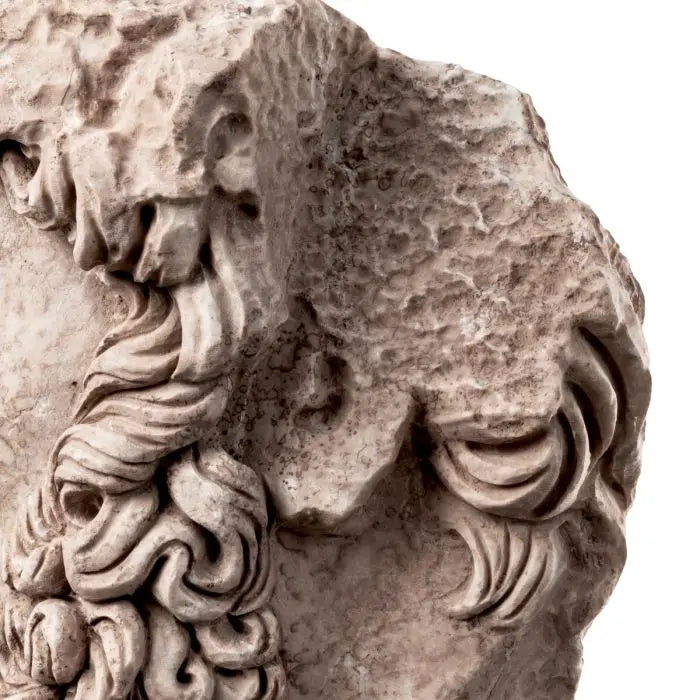
Busto de Lucio Vero
TM0020
- Precio regular
-
€2.295,00 - Precio regular
-
- Precio de venta
-
€2.295,00
El «Busto de Lucio Vero» de la colección The Met x Eichholtz es una exquisita reinterpretación de un retrato en mármol de tamaño superior al natural del coemperador Lucio Vero.
Este busto de mármol hecho a mano se apoya con elegancia sobre una base de metal negro, con unas medidas de 23,5 cm de ancho, 30 cm de profundidad y 58 cm de altura. Cada pieza es única, con variaciones en el color y las vetas que realzan su carácter. Inspirado en una antigua obra maestra de The Met, este busto captura la majestuosidad leonina de Lucio Vero, aportando un toque regio a cualquier espacio.
PROCEDENCIA HISTÓRICA
El Busto de Lucio Vero es una reinterpretación de un retrato en mármol del coemperador romano Lucio Vero (161–169 d. C.) que forma parte de la colección del Museo Metropolitano de Arte. Se dice que Vero, quien gobernó junto a Marco Aurelio (161–180 d. C.), fue un líder ocioso e irresponsable, pero la cabeza fragmentaria del Museo lo muestra representado favorablemente como alguien majestuoso y leonino. El busto original tipifica el estilo de talla antonino, con su exquisito trabajo de taladro en el cabello y sus dramáticos ojos grabados. Nuestra reinterpretación ha sido fielmente tallada en mármol, que ofrece variaciones únicas en el color y vetas naturales, y está colocada sobre una base de metal negro.
Preguntas sobre el producto Contáctanos
-
Dese prisa, solo queda 1 artículo en stock!
Product Details
Información general:
Mármol | base de metal negro
Solo para uso en interiores/lugares secos
Medidas
An. 23,5 | Prof. 30 | Al. 58 cm
Cuidados y mantenimiento
How to care for Marble, Travertine & Onyx
Marble is limestone that has metamorphosed and combined with natural elements. It is veined with a variety of colors and patterns. Since marble is easily stained, etched, and dulled, it is important that you know how to take care of it.
Travertine is also a form of limestone. This sedimentary rock is typically formed in springs, rivers, and lakes. It often has a fibrous or concentric appearance and exists in white, tan, cream-coloured, and even rusty varieties.
There are a few basic rules for getting the most out of your marble furniture and ensuring its longevity:
- Be careful of wet rings forming on the surface after watering flowers or plants.
- Place coasters or trivets under glasses and dishes to prevent the formation of ring marks.
- Never expose marble or travertine furniture to sharp objects which can scratch the limestone.
- Never use vinegar, ammonia, bleach, lemon or orange to clean marble or travertine, as acids can cause these limestones to corrode.
Cleaning & Maintenance
Dust marble and travertine surfaces twice per week with a soft cloth. Both marble and travertine stain very quickly, especially if liquids are left untouched on the surface. When you drop something, clean it up right away. Waiting too long can turn a simple spill into a stain, which can be difficult and sometimes even impossible to get rid of. Immediately clean orange juice, coffee, wine, and other drinks (or food) with strong pigments, and rinse with a clean, damp cloth. Never leave water on marble or travertine surfaces as it can cause stains.
Clean as gently as possible, never using abrasive cleaners or dusting sprays. Wash marble and travertine periodically with a cloth dampened with lukewarm water, and if necessary, some mild dishwashing liquid. Only use soap solutions that are potent enough to wipe off the dirt but mild enough to keep the limestone unharmed. Gently run the cloth over the surface, making a circular motion in the spots that need a little extra pressure. Remove the soap with another damp cloth and wipe the limestone dry.
No se pudo cargar la disponibilidad de recogida